Tuesday, September 10, 2024

Debate Over Classroom Air Conditioning as China Faces Heatwave


A heated debate has emerged on Chinese social media regarding the use of air conditioners in classrooms as the country grapples with an unusual heatwave. With temperatures exceeding 35°C in many cities, parents in some of China’s hottest regions are urging schools to install air conditioning.

The discussion gained traction in Changsha, where the local education department’s decision not to install air conditioners sparked controversy. The department argued that enduring the heat would "cultivate the spirit of hard work and endurance" in students, a comment that drew widespread criticism online.

Many parents and users on platforms like Weibo expressed frustration, questioning the logic of forcing children to study in extreme heat. ‘Can the education bureau work in 40-degree heat before deciding this is the way to cultivate such spirit?’ wrote one user. Others highlighted the growing impact of global warming, urging authorities to prioritize students' health and comfort.

While most classrooms in China are equipped with ceiling fans rather than air conditioners, the rising temperatures have intensified calls for change. However, concerns over costs and potential health risks, such as the increased likelihood of colds in air-conditioned rooms, have complicated the discussion.

In some cities, like Xiangtan, schools have asked parents to contribute to air conditioning costs, but local authorities later ordered the reimbursements. Online opinions remain divided, with many arguing that student comfort should be prioritized amid worsening heatwaves. Some schools are using creative solutions, such as placing ice blocks in classrooms, while others have delayed the start of the school year due to the extreme weather.

The issue of air conditioning in schools remains unresolved as China continues to experience longer, hotter heatwaves, with no easy solution in sight.

Israeli Airstrike in Gaza Humanitarian Zone Kills 13, Targets Hamas Commanders


An Israeli airstrike in southern Gaza has killed at least 13 people, according to a local hospital. The strike took place in a designated humanitarian zone in al-Mawasi, near Khan Younis, where displaced Palestinians had sought refuge. Residents reported that three missiles struck a camp, creating deep craters and causing widespread destruction.

The Israeli military stated that the airstrike targeted senior Hamas members, including Samer Abu Daqqa, head of Hamas's aerial unit, and Osama Tabesh, leader of its observation and targets department. According to Israel, these individuals were operating from a command center embedded within the humanitarian area. The military also accused Hamas of using civilians as human shields by hiding military operations in civilian zones.

Hamas denied the presence of any command center in the area, calling the strike a ‘massacre’ and rejecting Israel’s claims. Rescue operations continued after the strike, with local authorities reporting additional casualties and injuries.

The strike is part of Israel's broader military campaign against Hamas following the group's attack on southern Israel in early October, which led to significant casualties and hostages being taken. Since the conflict began, over 40,980 people have been reported dead in Gaza, and more than 80% of the population has been displaced, many having fled multiple times.

Ugandan Athlete’s Ex-Partner Dies from Burns After Fatal Attack


The former boyfriend of Ugandan Olympic athlete Rebecca Cheptegei, who fatally set her on fire, has died from burns he sustained during the attack, a hospital official in Kenya has confirmed.

Dickson Ndiema ambushed Cheptegei as she returned home from church, dousing her with petrol before igniting the fire. The two had reportedly been in a dispute over a small piece of land in north-western Kenya, where Cheptegei both lived and trained.

Ndiema died in the intensive care unit of Moi Teaching and Referral Hospital, where he had been treated for burns covering more than 40% of his body. The hospital stated that Ndiema succumbed to respiratory failure and sepsis due to severe burns.

Cheptegei died four days after the attack, suffering from burns that covered over 80% of her body. Neighbours recalled hearing her cries for help as she ran towards them engulfed in flames.

Ndiema, who was initially set to face murder charges, is no longer subject to prosecution following his death. An inquest into the deaths will now be opened.

Cheptegei's death has drawn global attention, marking the third fatal attack on a Kenyan-based female athlete in recent years. In similar incidents, partners or ex-partners have been named as suspects in the deaths of athletes Agnes Tirop in 2021 and Damaris Mutua in 2022.

Cheptegei, a 33-year-old marathon runner, competed for Uganda, achieving recognition after struggling to break through in Kenyan athletics. She represented Uganda at the Paris Olympics earlier this year and won gold at the 2022 World Mountain and Trail Running Championships in Thailand.

Her funeral will be held at her ancestral home in Bukwo, Uganda.

UK Retailer Harrods Sells Fukushima Peaches for the First Time


British luxury retailer Harrods has begun selling peaches from Japan’s Fukushima region, marking a historic first as European stores have not carried produce from the area since the devastating nuclear disaster of 2011. Priced at £80 ($104) for a box containing just three peaches, this move is part of a broader effort to rehabilitate the image of Fukushima’s agricultural sector, which has suffered from lingering fears over radiation contamination for more than a decade.

The 2011 disaster, caused by a massive earthquake and tsunami that led to the meltdown of the Fukushima Daiichi nuclear power plant, resulted in widespread radiation leaks. This cast a long shadow over the region, which is Japan’s second-largest producer of peaches. Farms in Fukushima struggled to sell their products both domestically and internationally due to ongoing concerns about safety.

In a bid to restore trust, the Tokyo Electric Power Company (Tepco), the operator of the damaged nuclear plant, has launched campaigns to reintroduce Fukushima produce to global markets. This includes not only the UK but also countries like the US and Thailand. Harrods’ decision to offer Fukushima peaches follows the UK lifting its remaining import restrictions on food products from the region in 2021, allowing the peaches to undergo trial sales at cultural events before being made available in the iconic London department store.

Harrods is expected to expand its Fukushima offerings in the coming months, with plans to sell Shine Muscat grapes from the region starting in October. To ensure the safety of exported products, all farm and fishery goods from Fukushima undergo rigorous radiation testing before they are shipped abroad. This measure is part of ongoing efforts to guarantee that the produce meets international safety standards.

The initiative has been seen as a symbolic step in rebuilding the region’s reputation and economy, with the sale of Fukushima peaches at such a high-end retailer like Harrods serving as an endorsement of the quality and safety of the produce. Tepco’s campaign is aimed at boosting confidence and encouraging consumers worldwide to once again embrace Fukushima-grown food.


Over 80 Dead as Vietnam Battles Aftermath of Devastating Typhoon


At least 82 people have been confirmed dead in Vietnam following a powerful typhoon that struck the country over the weekend, bringing heavy rainfall, landslides, and widespread flooding. Thousands of residents in northern provinces have been left stranded on rooftops, with many posting pleas for help on social media.

Typhoon Yagi, regarded as one of the most severe storms to hit Vietnam in three decades, has caused extensive damage, leaving 1.5 million people without electricity. Footage from Phu Tho province captured the collapse of Phong Chau bridge on Monday, sending vehicles into the river below.

Though the storm has weakened into a tropical depression, authorities warn that more disruptions are expected. With 64 people still missing and over 700 injured, officials have issued flood and landslide warnings across 18 provinces. The storm has also damaged homes, factories, and critical infrastructure. Before reaching Vietnam, Yagi caused 24 fatalities in China and the Philippines.

Irish Government Set to Ban Disposable Vapes


The Irish government is preparing to implement a ban on disposable vapes, following the cabinet's approval of draft legislation introduced by Health Minister Stephen Donnelly. The proposed law would prohibit the sale, production, and import of single-use vapes in Ireland, citing environmental and public health concerns.

In addition to banning disposable vapes, the legislation seeks to restrict the sale of certain flavours, which are believed to appeal to children. There are reportedly as many as 15,000 flavour combinations currently available. The draft law will also limit point-of-sale displays and advertising for vapes, except in specialist stores.

Further measures include restrictions on packaging colours and imagery to discourage marketing aimed at younger people. Ireland already prohibits the sale of nicotine products to individuals under 18, and additional restrictions on advertising, pop-up shops, and sales from vending machines are expected to come into effect next year. The government’s research indicates that single-use vapes are often purchased impulsively, particularly by younger consumers.


Saturday, August 31, 2024

Walking in Creativity: Opara Ujunwa Anthonet’s Shoe Making Dream

By Nightengale Ben-Onyeukwu


CEO of Gabby’s Shoe Making.

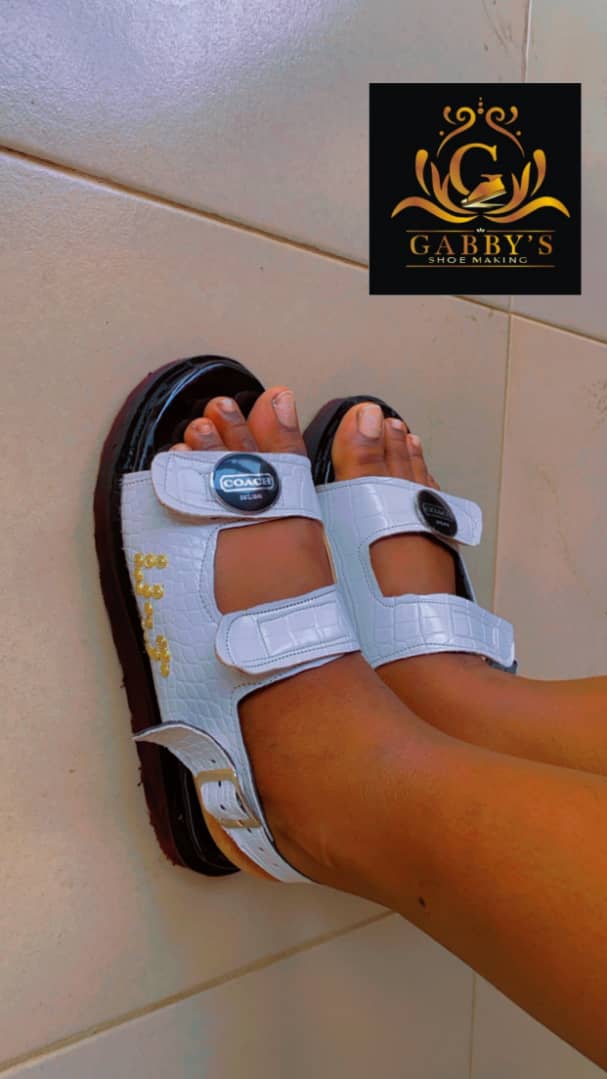
Imagine stepping into the dynamic world of shoe making, where creativity meets craftsmanship, and every stitch tells a story. This is the journey of Opara Ujunwa Anthonet, a passionate shoe maker from Imo State, who defied the odds to pursue her dream of creating beautiful footwear under her own brand, Gabby’s Shoe Making.

‘My name is Opara Ujunwa Anthonet,’ she introduces herself with pride. ‘I studied English Language and Literature at Alvan Ikoku College of Education, but my true passion lies in creativity, especially in shoe making.’

From a young age, Ujunwa was drawn to the arts. Visual arts were her first love, as she admired the ability to create something beautiful and meaningful with her hands. Although she wasn’t able to formally study visual arts, she found a way to channel her artistic instincts into another form of creative expression—shoe making. ‘I’ve always loved creativity,’ she explains. ‘That’s why I entered shoe making. It has been my dream, and I’m passionate about it.’

Shoe making, for Ujunwa, became a way to blend her love for visual art with the practical skills of craftsmanship. ‘Designing a shoe is like creating a piece of art,’ she says. ‘Each pair of shoes is a medium through which I can express my creativity, just like in visual art.’

Her journey into the world of shoes began on October 27, 2023, when she started learning the craft professionally. ‘I joined Maly Shoe Making, and two months later, I was already creating my own shoes,’ Ujunwa recalls with a smile. ‘It wasn’t easy, but I loved every moment of it. I was determined to succeed.’

Ujunwa’s determination set her apart from her peers. While many of her senior colleagues at Maly Shoe Making were still struggling to grasp the intricacies of the trade, she had already started making shoes independently. ‘The problem is, we aren’t taught as well as we should be,’ she says candidly. ‘Most of the secrets are hidden from us. So, I had to give myself extra lessons and practice. I couldn’t wait for someone to teach me everything—I might never have the opportunity.’

This extra effort paid off. Ujunwa began attracting customers, and her small shoe-making business started to grow. ‘I thank God for my customers. It hasn’t been easy, but the passion I have for shoe making keeps me going,’ she shares. ‘And I’m grateful to my dad, Opara Milletus Ejike, also known as Adidas, for supporting me. He bought me every material I needed to get started.’

Her skills developed so quickly that almost all the slippers worn by her family members were made by her. From her parents to her siblings and other relatives, Ujunwa’s creations have become a household staple, demonstrating not only her talent but also how swiftly she mastered the craft.

But Ujunwa’s dreams don’t stop there. ‘I want to have a very big shoe-making company, one that will reach across Nigeria and even the world,’ she says, her eyes lighting up with ambition. ‘I’m also thinking of having my own workshop, where my students will wear uniforms, and everything will be organised.’

She envisions a well-structured workshop, divided into sections to help students learn at their own pace. ‘First, you’ll need to be good at drawing before you can enter the first section,’ she explains. ‘If you’re perfect in drawing, you’ll move on to the next level, where you’ll start cutting patterns. I believe dividing students into sections will prevent them from getting lost in the process.’

Despite the challenges she’s faced, including the lack of proper instruction at her current training centre, Ujunwa remains undeterred. ‘Since I’m not learning as much as I should from where I am, I joined online classes to learn more,’ she says. ‘It’s helped me a lot to distinguish between different types of footwear and shoes.’

Her journey isn’t just about making shoes; it’s about a deep-rooted love for learning and self-improvement. Ujunwa recalls how she taught herself to sew, another skill that has proven invaluable in her shoe-making journey. ‘I remember when my father bought me a sewing machine,’ she says, smiling at the memory. ‘It was just lying there in my room, unused. One day, I told myself I had to learn how to sew.’

That determination led her to a night of relentless practice. ‘I woke up in the middle of the night and started using the machine. My family couldn’t sleep because of the noise, but I didn’t give up. By morning, I had managed to sew a straight line. It was just a straight line, but I was so happy,’ she says, laughing. ‘I even showed it to my mum!’

That straight line was just the beginning. It’s that same persistence that drives Ujunwa today, whether she’s sketching new designs, crafting shoes, or learning new techniques. ‘I wish I had contracts to make many pairs of shoes,’ she says, her voice filled with hope. ‘I would love that.’

For Ujunwa, the process of making shoes is as much about art as it is about technique. ‘Before you can make a shoe, you must learn how to draw,’ she emphasises. ‘Making footwear is more about drawing. If you don’t know how to draw, it would be hard to succeed.’

This love for drawing has also made her a mentor to her peers. ‘Sometimes, I tell my senior colleagues to go home and practice drawing,’ she shares. ‘When they’re done, they bring it to me for correction.’

Ujunwa’s passion for shoe making is so intense that it sometimes consumes her entire day. ‘Sometimes, if I’m working on my shoes, I won’t eat until I finish,’ she admits. ‘I might start early in the morning and not eat until four in the afternoon. That’s how much I love what I do.’

Her journey is one of passion, perseverance, and an unyielding commitment to her craft. As she continues to create beautiful shoes under the Gabby’s Shoe Making brand, complete with her own logo, and build her reputation, Ujunwa’s story serves as an inspiration to anyone with a dream—especially those who dare to pursue it with all their heart.

For custom-made footwear and more information, contact Opara Ujunwa Anthonet of Gabby’s Shoe Making via: 

WhatsApp: 08107131579

Email: gabbyshoemaking@gmail.com

Follow Gabby’s Shoe Making on social media:

Instagram: Gabby’s Shoe Making

Facebook: Gabby’s Shoe Making

Twitter: Gabby’s Shoe Making

TikTok: Gabby’s Shoe Making

WhatsApp Channelhttps://whatsapp.com/channel/0029VafBcOoDZ4LZIdJzNM3s

Join her WhatsApp channel for the latest updates, exclusive offers, and a closer look at her creative process. It’s the perfect way to stay connected with Ujunwa’s growing brand and witness her journey as she turns her shoe-making dreams into reality.


Step Up Your Style with Gabby’s Shoe Making – Custom Footwear Crafted Just for You!


Gabby's Shoe Making Logo

Crafted with Passion by Gabby’s Shoe Making


Opara Ujunwa Anthonet, CEO of Gabby’s Shoe Making


You deserve footwear that combines style and comfort, and Gabby’s Shoe Making delivers just that. Each pair of shoes is crafted with creativity and precision to ensure you step out with confidence.

👞 Unique Designs
🌟 Premium Quality
🖐 Handcrafted with Passion

Browse through Gabby’s latest collection and find your perfect pair today. Support local talent and enhance your wardrobe with Gabby’s exceptional craftsmanship. For orders and enquiries, don’t hesitate to reach out!

The Day I Bought Something I Did Not Need

  By Nightengale Ben-Onyeukwu I went out that day to buy one thing. I already knew what I wanted and how much it would cost, so I also k...